When your A/C starts blowing warm, it always seems to happen at the worst time. You are already sweating, you are stuck in traffic, and suddenly a quick internet search shows a dozen cans promising an instant fix. They are cheap, tempting, and claim to seal leaks without a repair bill.
Here is the catch. A/C sealants are not a normal repair step.
In many cases, they turn a manageable leak into a much bigger problem.
What DIY A/C Sealants Are Supposed To Do
Most DIY sealant products are refrigerants with an added chemical designed to harden when it comes into contact with moisture or air. The idea is that when refrigerant leaks out, the sealant hits the leak point, reacts, and plugs the hole.
On paper, that sounds perfect for small leaks. In real systems, it is complicated because moisture and air are not confined to leak points. They can also exist in the system itself if it has been opened, run low, or improperly recharged.
Once sealant starts reacting inside the system, it can harden where you do not want it.
Why Car A/C Systems Are Sensitive To Contamination
Vehicle A/C systems rely on clean passages and controlled flow. The expansion valve or orifice tube is a small restriction that meters refrigerant. The condenser and evaporator have tiny channels. The compressor relies on oil circulation moving with the refrigerant.
When any of those narrow points get partially blocked, cooling performance drops, and pressures change. A system can go from weak cooling to no cooling, and the compressor can start working harder than it should.
Sealant is a contaminant when it cures in the wrong place. That is why many shops treat it as a system-wide risk, not a small additive.
When Sealants Seem To Work And Why That Can Be Misleading
Some people use a sealant and feel cold air again for a while. That can happen when the leak is extremely small, and the system is only slightly low. In that situation, almost any recharge can feel like a win at first.
The bigger problem is that the leak still exists. It might be a weak O-ring, a leaking service port core, or a condenser pinhole. Sealant does not restore rubber, fix damage, or replace worn seals. It creates a plug, and that plug may not hold for long.
If the leak returns, the system now contains sealant, and future repairs may become more complicated.
How Sealants Can Create Bigger Problems
The biggest risk is that the sealant cures within the system rather than only at the leak point. Moisture is the trigger for many of these chemicals. If the system has moisture inside, the sealant can react in the wrong areas.
Here are common ways sealant can make things worse:
- It can clog the expansion valve or orifice tube, reducing cooling sharply
- It can contaminate recovery and recharge equipment, which is why shops may refuse service
- It can gum up condenser passages, especially on modern condensers with very small channels
- It can create pressure problems that strain the compressor
- It can turn a simple leak repair into a full component replacement situation
This is why sealant is often described as a gamble. You may buy temporary relief, but you may also buy a much larger repair bill later.
Why Many Shops Won’t Service Systems With Sealant
Professional A/C equipment recovers refrigerant, filters it, and precisely measures the charge. Sealant can damage or contaminate that equipment, putting other customers’ vehicles at risk. Because of that, many shops will not connect their machines to a system that contains sealant.
Some shops will still service it, but they may require additional steps, dedicated equipment, or more extensive component replacement. That adds cost even if the original leak was small.
If you are trying to save money, this is the opposite of what you want.
Better Alternatives To Sealants For A/C Leaks
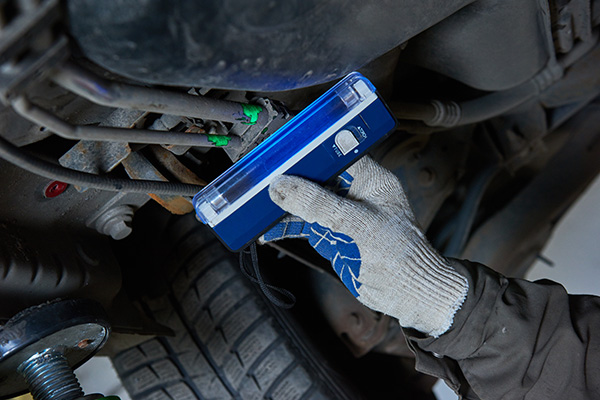
If the A/C is weak, the first step is confirming whether the charge is actually low and why. A proper inspection can check system pressures, vent temperature, and common leak points. If the system is low, leak finding can be done using methods like electronic detection or UV dye, depending on the situation.
Most leaks start in predictable places, such as service port valve cores, O-rings at hose connections, and condensers that have taken debris hits. Those repairs are usually straightforward when caught early.
Fixing the leak, then evacuating and recharging the system to the correct specification, is what gets you lasting cold air.
What To Do If You Already Used A Sealant
If you already added sealant, do not panic, but be honest about it when you bring the car in. Knowing it is in the system helps a shop plan the safest approach.
In some cases, the system can still be repaired, but it may require additional component replacement to remove contamination. The earlier you address it, the better, because continuing to run the system can circulate the sealant further and increase the chance of it curing in unwanted places.
Also avoid adding more products on top of it. Mixing sealants, recharge cans, and different refrigerants can create even bigger issues.
How A Proper A/C Repair Protects The Compressor
A low refrigerant system can reduce oil circulation, and that can shorten compressor life. Many people focus on comfort, but A/C repairs also protect expensive parts. When the system is sealed, charged correctly, and free of contaminants, the compressor works within its normal range.
That is why a real repair is often cheaper in the long run than repeated top-offs and quick fixes.
Get A/C Leak Repair in Atlanta, GA with Atlanta Car Care
At Atlanta Car Care, we can inspect your A/C system, locate the leak, and explain the most practical repair plan based on what we find, without risking bigger problems from sealants.
Schedule your A/C inspection, and let us get your cabin cooling back to reliable, consistent cold air.