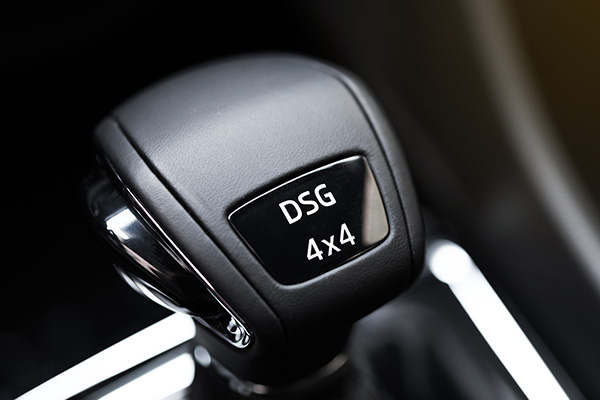
If you have driven a Volkswagen with a DSG transmission, you have probably noticed that it shifts quickly and feels more direct than a typical automatic. The engine stays in power, the shifts are snappy, and the car responds almost like a manual without a clutch pedal.
That feeling is not a coincidence. The DSG is built differently inside, and those design choices change how it behaves on the road.
What Is a DSG Transmission and How It Works in Volkswagens
DSG stands for Direct Shift Gearbox. Instead of a torque converter and a single set of clutches, a DSG uses two separate clutches and two gear sets inside one housing. One clutch handles the odd gears, the other handles the even gears. While you are driving in one gear, the next gear is already preselected on the other shaft.
When it is time to shift, the transmission simply releases one clutch and applies the other. Power delivery is handed off rather than interrupted. That is why shifts feel so quick and controlled compared to a traditional automatic, especially under hard acceleration.
How DSG Feels Different From a Traditional Automatic
From the driver’s seat, a DSG behaves more like an automatic most of the time, but with a few clear differences. Instead of the soft, sliding shift of a torque converter automatic, you get a firmer, cleaner change from gear to gear. At low speeds, it may feel a bit like a manual that someone else is shifting for you.
You might notice:
- Very quick upshifts when accelerating, with almost no “flaring” of engine speed
- A strong, direct feel when pulling away from a stop once the clutches engage
- Slightly more mechanical feel in parking lots as it engages and disengages at low speed
- Crisp, predictable downshifts in sport or manual mode that keep the engine in the power band
Once you get used to it, many drivers prefer the DSG feel, especially on spirited drives, highway on-ramps, and passing maneuvers.
Performance and Efficiency Advantages of VW’s DSG
Because the next gear is already lined up, the DSG can shift faster than most traditional automatics. Under acceleration, that keeps the engine in its sweet spot instead of letting revs fall off between gears. Turbocharged Volkswagen engines benefit from this because boost pressure stays more consistent, which helps with strong, smooth power delivery.
Efficiency is part of the picture, too. The clutches provide a more direct mechanical connection than a torque converter, which reduces energy loss in the transmission. That design can help with fuel economy when the car is driven reasonably, especially in normal or eco modes where the DSG will upshift early and keep engine speed low.
When we set these up after service, we pay attention to how they adapt to driving style so you get a good balance of response and economy.
Common DSG Quirks Drivers Notice in Daily Driving
Some behaviors are normal for a healthy DSG but can surprise drivers who are used to a traditional automatic. A few common quirks include:
- A brief hesitation or soft feel when first selecting drive or reverse as the clutches engage
- Slight shudder or judder at very low speeds if the clutches are adapting or lightly worn
- Quick, firm shifts under hard throttle that feel almost like a manual gear change
- More noticeable gear changes at parking lot speeds compared to a smooth torque converter
- Occasional “thinking” moment while the computer decides between two gears on rolling stops
These are part of how a dual clutch operates, but they should not be harsh, noisy, or unpredictable. If the behavior suddenly gets much worse, that is when it is time to have it checked.
Owner Habits That Can Shorten DSG Life
The DSG is a sophisticated unit, and the way it is driven and serviced makes a huge difference in how long it stays happy. Habits that can speed up wear include:
- Ignoring DSG fluid and filter service intervals or stretching them far past the recommendation
- Riding the throttle and brake at the same time in tight traffic or parking situations
- Repeated hard launches without allowing time for temperatures to cool down
- Holding the car on an incline with the throttle instead of using the brake at lights
- Continuing to drive through obvious shuddering, slipping, or warning messages
The fluid in a DSG has a tough job cooling and protecting clutches and internal components. Keeping that fluid fresh and driving with a bit of mechanical sympathy goes a long way toward preventing expensive repairs.
When Your DSG Needs Professional Attention
Most DSG issues start small. You might feel a light shudder when taking off from a stop, notice delayed engagement when selecting a gear, or experience a harsh shift in certain conditions. Warning lights or messages related to the transmission or gearbox should never be ignored, even if the car still drives.
During a proper inspection, a technician will scan for DSG-specific fault codes, check adaptation data, inspect fluid condition, and road test the vehicle to feel how it shifts in different modes. Sometimes, a fluid service and adaptation reset are enough to clean up minor complaints. In other cases, worn clutches, mechatronic components, or internal parts may need attention. The key is catching problems early before they affect more of the system.
Get DSG Transmission Service in Atlanta, GA with Atlanta Car Care
We work with Volkswagen DSG transmissions regularly and know how they should feel when they are working correctly. We can service DSG fluid and filters, diagnose shuddering or hesitation, and explain the best repair options to keep your car shifting quickly and smoothly.
Call Atlanta Car Care in Atlanta, GA, to schedule DSG transmission service and keep your Volkswagen performing the way it was designed to.