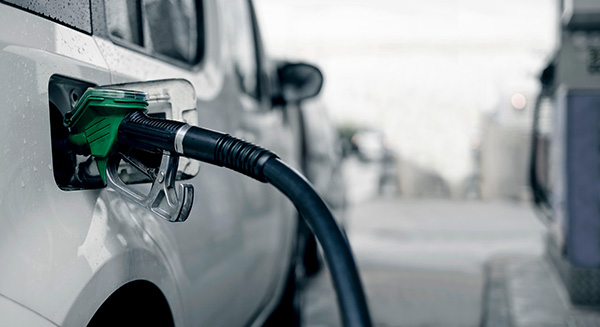
Fuel doors appear on different sides because manufacturers must fit the fuel tank, filler pipe, exhaust system, suspension, wiring, emissions equipment, and body structure into a limited amount of space. There is no universal rule requiring every vehicle to place the fuel door on the driver’s side or passenger’s side.
The location is usually determined during vehicle design. Engineers choose the side that provides a practical route from the filler opening to the fuel tank while keeping the pipe away from heat, moving suspension parts, and areas that need structural reinforcement.
Vehicle Packaging Has The Greatest Influence
The fuel door is connected to the tank by a filler neck, which may include a metal or reinforced plastic pipe, vent passages, seals, and emissions-control connections. That assembly needs enough room to reach the tank without sharp bends that could slow refueling or trap fuel.
Space under a vehicle is already occupied by several major systems:
- Exhaust pipes and mufflers
- Rear suspension components
- Axles and driveshafts
- Fuel tank straps
- EVAP hoses and valves
- Electrical wiring
- Brake lines
- Structural crossmembers
If the exhaust system runs along the left side, routing the filler pipe along the right may be easier. On another platform, the suspension, spare tire well, or all-wheel-drive components may make the left side the better choice.
Fuel Tank Shape And Position Play A Role
Fuel tanks are rarely simple rectangular containers. They are molded into complex shapes that fit around the body, rear seats, suspension, exhaust, and drivetrain. Some are positioned beneath the rear seat, while others sit farther toward the back of the vehicle.
The tank’s inlet determines where the filler neck can connect. Moving that connection to the opposite side may require a longer pipe, additional bends, different vent routing, or changes to the tank itself. These changes can add cost and make refueling performance harder to control.
Manufacturers often use one vehicle platform for several models. A sedan, hatchback, crossover, and wagon may share major structural and fuel-system components. Keeping the fuel door on the same side across related models can simplify production even when another location might appear more convenient to the driver.
The Driver’s Side Is Convenient, But Not Always Practical
A fuel door on the driver’s side allows the driver to pull alongside a pump, step out, and begin refueling without walking around the vehicle. It can also make it easier to position the car because the driver can see the pump island through the side window and mirror.
That convenience does not override every engineering requirement. If placing the filler neck on the driver’s side interferes with exhaust routing, tank design, or structural components, the manufacturer may choose the passenger side instead.
Passenger-side fuel doors can have their own advantages. The driver stands farther from moving traffic when adding fuel from a roadside container, although roadside refueling remains hazardous and should be avoided whenever possible. Pump layouts also vary enough that either side may be convenient at a particular station.
Country Of Origin Does Not Provide A Reliable Answer
Drivers sometimes assume that the fuel door is placed opposite the steering wheel or based on whether traffic moves on the right or left side of the road. Vehicle origin may influence design traditions, but it does not reliably predict fuel door placement.
Two vehicles built by the same manufacturer may have fuel doors on opposite sides. The difference may come from separate platforms, tank designs, assembly plants, exhaust layouts, or shared components from another model.
Manufacturers also sell vehicles in countries with different driving sides. Redesigning the tank, body panel, filler pipe, and emissions equipment for every market would be costly. In many cases, the fuel door remains in the same location regardless of whether the vehicle has left-hand or right-hand steering.
The Dashboard Usually Shows You The Correct Side
Most modern vehicles place a small arrow or triangle beside the fuel pump symbol on the dashboard. The arrow points toward the side of the vehicle where the fuel door is located.
For example, an arrow pointing left indicates a fuel door on the left side. This feature is especially helpful in rental cars, recently purchased vehicles, or households with several cars.
Some older vehicles display a fuel pump symbol without a directional arrow. The position of the hose graphic on the symbol is not a dependable indicator because dashboard designs differ. When no arrow is present, check the exterior mirror before approaching the pump or confirm the location while the vehicle is parked.
Why Fuel Filler Problems Can Make Refueling Difficult
The filler system needs to let fuel enter while allowing displaced vapor and air to move through controlled passages. A restricted vent, damaged filler pipe, stuck valve, or problem in a capless fuel system can cause the pump nozzle to shut off repeatedly.
Fuel odors, liquid fuel near the filler area, or a check engine warning may indicate a leak in the filler neck or evaporative emissions system. Corrosion can also damage metal filler pipes, particularly in areas where road salt and moisture collect behind the body panel.
An inspection may include the fuel cap or capless seals, filler pipe, vent hoses, EVAP valves, fuel tank connections, and surrounding wiring. Because gasoline and fuel vapor are flammable, visible leaks or strong odors require prompt attention.
The Side Does Not Change How The Car Performs
Fuel door location does not affect engine power, fuel economy, or the amount of fuel the tank can hold. It is primarily a packaging and manufacturing decision.
Drivers can protect the filler system by tightening the fuel cap correctly, keeping dirt away from capless openings, and avoiding continued refueling after the pump nozzle shuts off. Overfilling can push liquid fuel into vapor-control components that are designed to handle fuel vapor rather than gasoline.
Regular maintenance should also include attention to check engine warnings and fuel odors. Small EVAP leaks may not change how the car drives, but they can prevent emissions testing and allow fuel vapor to escape.
Get Fuel System Service In Atlanta, GA, With Atlanta Car Care
Atlanta Car Care in Atlanta, GA, can check fuel filler concerns, EVAP leaks, damaged caps, venting problems, warning lights, and repeated pump shutoff during refueling.
Contact us to schedule fuel system service when your vehicle becomes difficult to fill or develops a fuel odor.